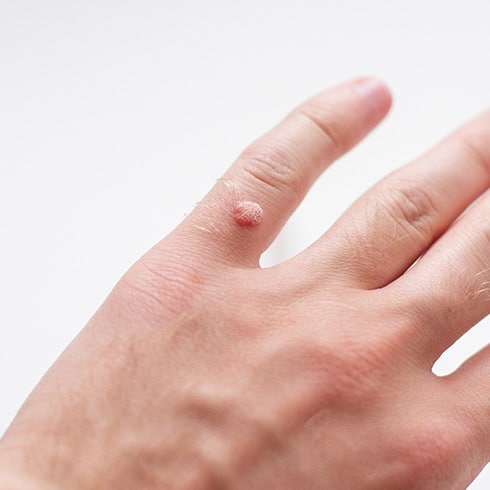
What are Warts?
Warts are grainy skin growths that often occur on the fingers and hands. Skin warts are caused by a virus called the human papillomavirus (HPV) and can be transmitted through touch. There are over 100 types of HPV, and about 10 of them cause cutaneous warts. It may take as long as six months to develop a wart after your skin has been exposed to the virus. While most warts are usually harmless and disappear on their own, they may be bothersome or embarrassing to some. Warts tend to grow slowly and, in some cases, can spread to other areas of the body or to other people through direct contact.
Symptoms of common warts include:
- Fleshy, grainy bumps with a rough surface
- Can be white, skin-colored, pink, or tan
- Are rough to the touch
- Have black pinpoints inside of them, which are clotted blood vessels within the wart tissue
Many warts will resolve on their own over time, but others may persist and require professional treatment. Individuals who may be at a higher risk for developing skin warts include children and young adults, as they may not have built up immunity to the virus yet, and people with weakened immune systems. Be sure to see a doctor right away if you have a wart that bleeds easily, causes you pain, or spreads easily to other parts of the body.
Types of Warts
There are several types of warts, each with distinct characteristics and preferred locations on the body.
- Common warts (verruca vulgaris) are the most frequently seen and can develop anywhere, but are especially prevalent on the hands and fingers. These warts are small, raised, and have a rough surface.
- Plantar warts form on the soles of the feet and can be particularly uncomfortable due to pressure from walking; they may appear as thickened, callus-like spots.
- Flat warts are smoother and smaller than other types, often appearing in clusters on the face, hands, or shins, and are more common in children and young adults.
- Filiform warts are long, thin, and thread-like, typically emerging on the face, neck, or around the lips.
- Genital warts are a type of sexually transmitted infection caused by certain strains of HPV and require specialized treatment. Understanding the different types of warts can help you recognize and seek appropriate care for these common skin growths.
Causes and Risk Factors
Warts are caused by infection with the human papillomavirus (HPV), a group of viruses that invade the skin through tiny cuts or abrasions. The virus spreads easily through direct contact with an infected person or by touching surfaces that have been contaminated, such as communal showers or gym equipment. Individuals with a weakened immune system, including those with HIV, undergoing chemotherapy, or taking immunosuppressive medications, are at greater risk of developing warts. Certain professions, like meat handlers and healthcare workers, may also face increased exposure to HPV. Additionally, habits such as nail-biting or picking at the skin can create entry points for the virus, making it easier for warts to develop.
Diagnosing Warts
To diagnose warts, a healthcare provider such as a dermatologist will usually perform a thorough visual examination of the affected skin. They may ask about your medical history and any risk factors that could contribute to the development of warts. In cases where the diagnosis is uncertain or if the growth appears unusual, a small sample (biopsy) may be taken to rule out other skin growths, including skin cancer. Accurate diagnosis is important, as some skin conditions can mimic the appearance of warts but may require different management.
How to Prevent Warts
There are several steps you can take to help prevent warts from developing or spreading. Warts are highly contagious and are mainly passed by direct skin contact, but you can also spread warts by sharing towels or razors that have touched a wart on your body or someone else’s.
Warts on one part of the body can be spread to other areas, so it’s important to wash your hands and anything that touches your warts. Avoiding direct contact with skin warts on yourself or others, not picking at existing warts, keeping your skin clean and dry, and avoiding walking barefoot in public areas, especially to prevent plantar warts, can all help reduce your risk.
The HPV vaccine is recommended as an effective way to prevent certain types of warts and HPV-related cancers. Keeping your immune system healthy is also one of the best ways to prevent warts, as a stronger immune system is better equipped to fight off the HPV virus before wart tissue has a chance to form.
Treatment Options for Warts
Prior to treatment, Dr. Erwin will assess your wart to determine the best possible plan of action. The goal is to fight warts effectively while minimizing discomfort and the risk of recurrence. A variety of methods are used to treat warts, including topical, destructive, and combination therapies. Wart removal can be achieved through a number of treatment options depending on the type, size, and location of the wart. These may include cryotherapy, salicylic acid, electrosurgery, and laser therapy.
Some warts can be stubborn or recalcitrant and may require advanced treatment options. Combination therapies, such as using liquid nitrogen with topical agents like imiquimod, can be effective for treating stubborn or recalcitrant warts. Pediatric dermatology services provide specialized wart treatment for children.
Cryotherapy
A treatment method called cryotherapy involves freezing off the wart with liquid nitrogen. Cryotherapy is a common medical treatment for warts. This will cause a blister to form under and around the wart. The dead wart tissue will then fall off within about a week. Most warts require repeated treatments for complete wart removal.
Salicylic Acid
Prescription-strength wart medications with salicylic acid work by removing layers of the wart tissue over time, gradually breaking down the rough surface until the wart is gone. For best results, soak the wart in warm water before applying salicylic acid to soften the skin. After soaking, use a disposable emery board to gently sand down the wart; always use a new emery board each time to avoid spreading the virus. Removing dead skin in this way helps improve the effectiveness of topical treatments.
Trichloroacetic Acid or Cantharidin
For stubborn skin warts that do not respond to salicylic acid or cryotherapy, trichloroacetic acid may be used. The surface of the wart is first shaved away, and the acid is applied with a wooden toothpick. Repeated treatments may be needed, particularly for plantar warts or many warts clustered together.
Bleomycin or Candida Antigen
These can be injected into the warts and will elicit an immune response that entails swelling, redness, and sometimes pain. This approach is often used when many warts are present or when other methods have not been effective.
Minor Surgery
Some skin warts can be cut away during minor surgery for more immediate wart removal. This may leave a scar where the wart used to be and is typically reserved for cases where other treatments have failed.
Prognosis for Warts
The outlook for most warts is generally positive, as they are generally harmless and often resolve on their own over time. However, some warts can persist for months or even years, especially in individuals with a weakened immune system. In rare cases, untreated warts may lead to complications, including the development of skin cancer. Professional treatments can help remove warts more quickly and reduce the risk of spreading the virus to others. While warts may sometimes recur after treatment, ongoing care and follow-up with your healthcare provider can help manage and monitor any changes in your skin.
Ideal Candidates for Wart Treatment
If you have a wart that has become painful or changed in appearance over time, has persisted despite at-home treatments, or is bothersome, you may be able to benefit from professional wart removal. Warts tend to be more difficult to eliminate once they have been present for a long time, so early treatment is always recommended. An assessment is required by Dr. Erwin to best determine which option to use to treat warts most effectively for your individual situation. If you are interested in scheduling an appointment, contact our office today!
Contact Us Today
Do you have skin warts that are bothersome or unsightly? To learn more about wart removal and if it is right for you, contact our office by calling 979-543-9933! Your first step will be to schedule an appointment with Dr. Erwin, during which she will assess your wart tissue and determine the best plan to treat warts and help you feel confident in your skin again.